Building, Losing, and Evolving Your Crew in a Living Sci‑Fi Universe
In GENETICA, your crew isn’t just a list of stats they’re the beating heart of your expedition. Every recruit you hire, rescue, or capture becomes a living system of biology, psychology, and history. They grow, break, heal, mutate, and sometimes die. And every one of those events becomes part of the story your ship carries across the stars.
This dev blog explores how we designed the Crew Lifecycle System, why it matters for gameplay, and how it transforms GENETICA into a simulation where every decision feels personal.
Recruiting, Rescuing, and Capturing Crew Members
Crew acquisition is intentionally diverse. We wanted players to feel like they’re navigating a real frontier not a menu of pre‑baked NPCs.
Ways You Can Gain Crew
- Hiring specialists at stations, colonies, and black‑market hubs
- Rescuing stranded survivors from derelicts, crash sites, and plague zones
- Capturing hostile operatives, pirates, or escaped experiments
- Growing vat‑born clones or engineered lifeforms
- Trading with factions who value people as currency
Each method affects the crew member’s loyalty, mental stability, and initial stats. A captured pirate might be a brilliant gunner… but also a ticking time bomb.
That tension “Do I trust this person?” is exactly the kind of emergent storytelling we want players to experience.
Assigning Crew to Events, Missions, operations, and Ship Systems
Crew members aren’t passive passengers they’re the operators, responders, and decision‑makers that keep your ship alive. When an event triggers, whether it’s a reactor overload, a hull breach, a diplomatic encounter, or a deep‑space anomaly, you choose which crew handles it. Their skills, injuries, traits, and mental state directly influence the outcome. A veteran pilot might thread your ship through an asteroid storm with surgical precision, while an inexperienced recruit could panic and make things worse.
Events in GENETICA are skill‑gated challenges that demand the right crew for the job. A research specialist is required to safely collect biological samples from alien flora, preventing contamination or accidental mutation. A trained engineer is needed to stabilize failing reactors or reroute power during ship‑wide emergencies, where an unskilled crew member might make the situation catastrophically worse. And when navigating hazardous anomalies or asteroid fields, only a certified pilot can execute the precision maneuvers needed to keep the ship intact.
Assigning crew to stations helm, engineering, deployables, medical, weapons, sensors transforms your ship into a living organism where every role matters. The right person in the right place can save the mission. The wrong one can doom it.
Deep Biographies and Procedural Histories
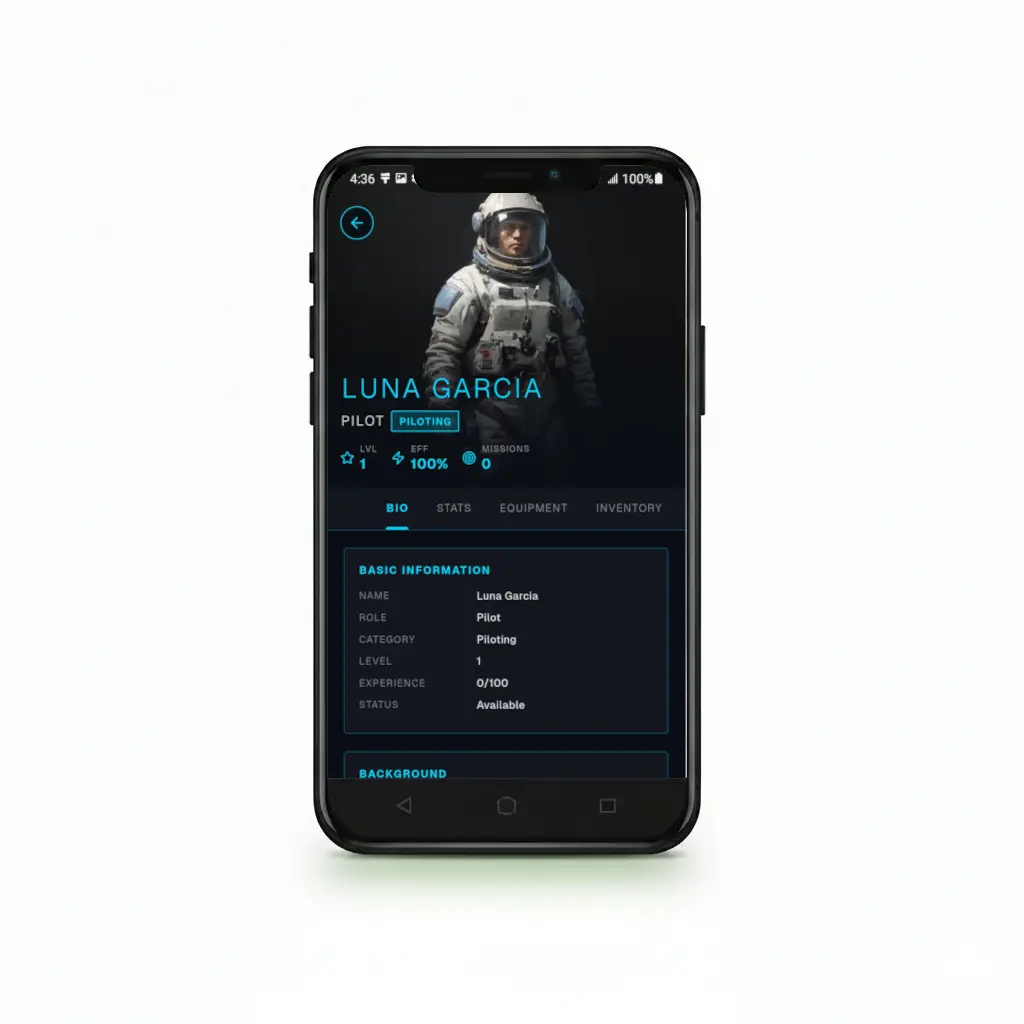
Every crew member arrives with a bio that blends handcrafted lore fragments with procedural generation:
- Homeworld
- Genetic lineage
- Previous occupations
- Faction affiliations
- Psychological traits
- Notable life events
But the real magic happens after they join you.
Dynamic Event History
Crew members track everything that happens to them:
- Injuries
- Promotions
- Missions survived
- Diseases contracted
- Body parts lost or replaced
- Relationships formed
- Mutations acquired
- Times they saved (or doomed) the ship
This creates a living archive of your journey a chronicle unique to your playthrough.
Stats, Skills, and Equipment: The Backbone of Crew Identity
Each crew member has a layered stat system:
Core Stats
- Strength
- Reflex
- Intelligence
- Endurance
- Willpower
- Biostability
Skills
Skills determine what equipment and ship systems they can operate:
- Piloting
- Engineering
- Medical
- Weapons
- Xenobiology
- Cybernetics
- Navigation
- Communications
A rookie engineer might struggle with reactor tuning, while a veteran can squeeze 12% more efficiency out of the same machine. Skills matter and they change the outcome of missions.
Equipment & Inventory
Crew members carry:
- Armor
- Weapons
- Tools
- Medical kits
- Personal items
- Augmentations
Equipment modifies stats, protects against hazards, and unlocks new interactions. A cybernetic arm isn’t just cosmetic it might boost strength, hacking ability, or virus resistance.
Medical Systems: Injury, Disease, and Body Modification
This is where GENETICA leans into its hard sci‑fi simulation roots.
Injuries Are Real
Crew can lose:
- Arms
- Legs
- Eyes
- Organs
These aren’t abstract debuffs they affect what the character can physically do. A pilot missing an eye suffers accuracy penalties until you replace it with a cybernetic implant.
Diseases and Viruses
Your universe is full of:
- Alien pathogens
- Engineered bioweapons
- Radiation‑induced mutations
- Parasitic infections
Some have cures. Some don’t. Some mutate faster than you can research them.
Your medical bay becomes a strategic asset and sometimes a desperate last hope.
Upgrades and Augmentations
Crew can be enhanced with:
- Cybernetics
- Gene‑editing
- Synthetic organs
- Combat implants
- Neural accelerators
Upgrades come with risks. Push too far, and you might destabilize their genome or trigger psychological breaks.
Death Matters Permanence Creates Meaning
Crew members can die, permanently.
We debated this early in development. Permadeath is harsh. But it also creates emotional stakes that no checkpoint system can replicate.
When your veteran engineer the one who saved your ship six times dies from a viral outbreak you couldn’t cure, it hits hard. And that’s the point.
Your story becomes a tapestry of triumphs and losses.
Character Select & Crew Management Concepts
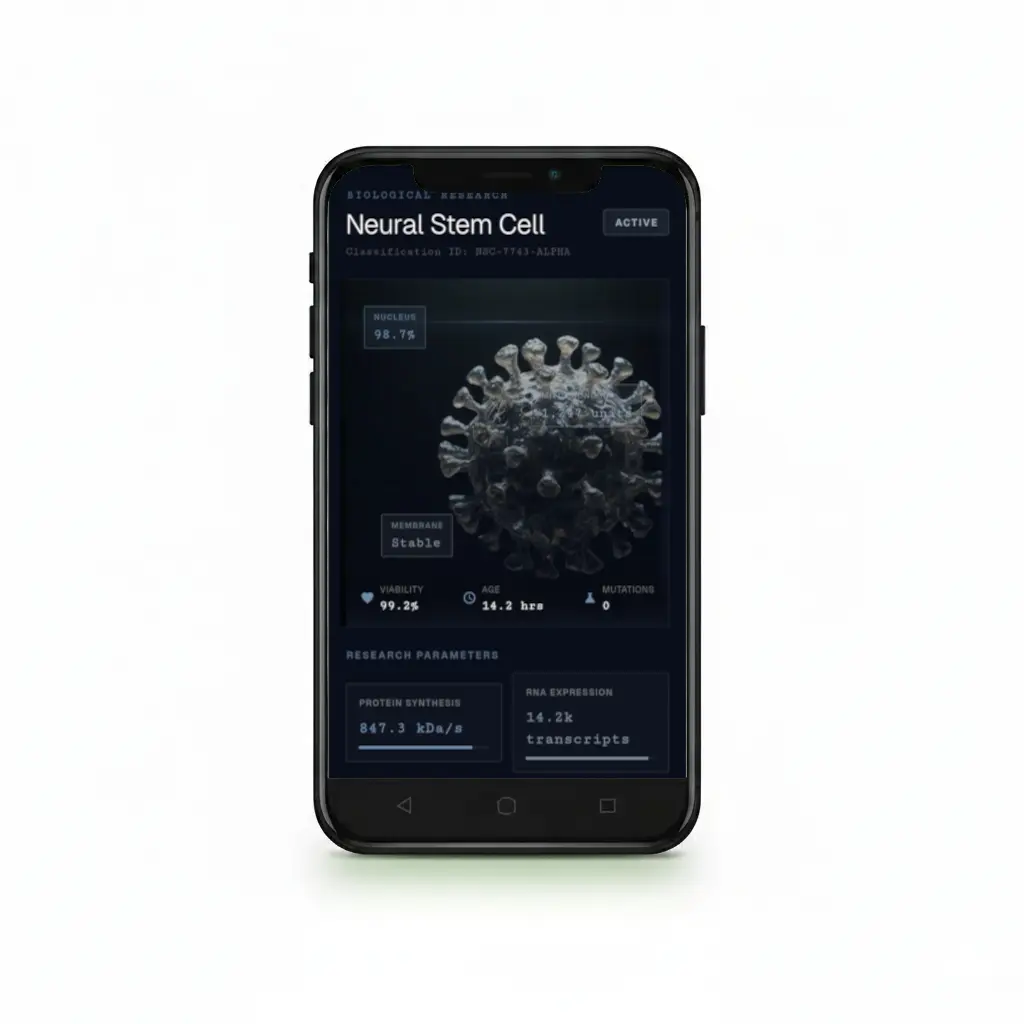
Below are examples of how the Character Select and Crew Purchase/Recruitment screens are presented in the GENETICA UI. These are designed for clarity, speed, and mobile readability while still delivering that gritty sci‑fi aesthetic.